
Saylor Said He'll Sell Bitcoin — What Actually Changed
Michael Saylor’s most famous line is “never sell.” He’s said it for years and built Strategy’s entire corporate-treasury thesis around it. Or he had. On Strategy’s Q1 earnings call, Saylor told analysts the company would probably sell some Bitcoin to pay a dividend — to “inoculate the market” and prove it could. The stock dropped four percent after hours, Bitcoin slipped below eighty-one thousand dollars, and crypto Twitter lit up. But the actual story is more interesting than the headline.
The engine behind the headline
Strategy has spent years doing something most public companies don’t: issuing high-yield preferred stock. Two flavors — STRK paying eight percent annual dividends, STRC paying roughly ten to eleven and a half percent — together throwing off about one and a half billion dollars in annual dividend obligations. Historically, Strategy funded those by selling MSTR common stock at a premium to its Bitcoin holdings and using the proceeds to buy more Bitcoin and cover payments. The trick is that MSTR often trades above the value of the Bitcoin it owns, a metric called mNAV; as long as that premium holds, every dollar raised buys more than a dollar of Bitcoin per share.
But the engine has a failure mode. If MSTR ever trades below the value of its Bitcoin, selling shares becomes accretive in reverse — you destroy Bitcoin-per-share instead of creating it. That’s where the new framework comes in. On the same call, CEO Phong Le put it more bluntly than Saylor: he believes in math over ideology, and at the point where selling Bitcoin rather than equity to pay a dividend is better for Bitcoin-per-share and for common shareholders, the company will do it. The trigger he named is mNAV falling below 1.0. It currently sits comfortably above that — so no Bitcoin is being sold today. But the rule has changed.
Why this is less dramatic than it sounds
Days later, Saylor clarified that Strategy plans to buy ten to twenty Bitcoin for every one it sells — staying a net buyer in his framing. And the company then announced it had purchased five hundred thirty-five more Bitcoin for forty-three million dollars. In the immediate term, accumulation continues.
There’s also a tax angle that takes the edge off the headline. Strategy has done this before: in December 2022 it sold seven hundred four Bitcoin and bought eight hundred ten two days later — not to reduce holdings but to harvest tax losses, realizing losses on high-cost-basis coins to offset prior gains, then buying back in. Today the setup is similar. Under accounting rules effective January 2025, Strategy marks Bitcoin to market every quarter, and Q1 produced a large paper loss that generated a multibillion-dollar deferred tax asset. If the company sells appreciated Bitcoin later, that asset offsets the gains — real money on a strategy that doesn’t have to reduce holdings on net.
What actually changed
So what changed? Not “Saylor is selling Bitcoin” — that’s not quite right. What changed is the rule he’s operating under: from “never sell” to “we’ll sell when it’s accretive.” For now, with mNAV above the threshold and Strategy still accumulating, no net selling is happening — but the framework is different, and that matters for how you read every future move the company makes. What to actually watch: the mNAV ratio, demand for STRC preferred stock, and whether Bitcoin appreciates enough to keep the spread working. Those numbers will tell you whether Strategy is a net buyer or a net seller.
Anyone telling you Saylor capitulated is reading the headline. Anyone telling you nothing changed is reading the walkback. The actual change is somewhere in between — and as usual, the in-between is the part worth understanding.
Not investment advice. WTH Crypto is editorial commentary, not financial guidance.
Related
 Happened
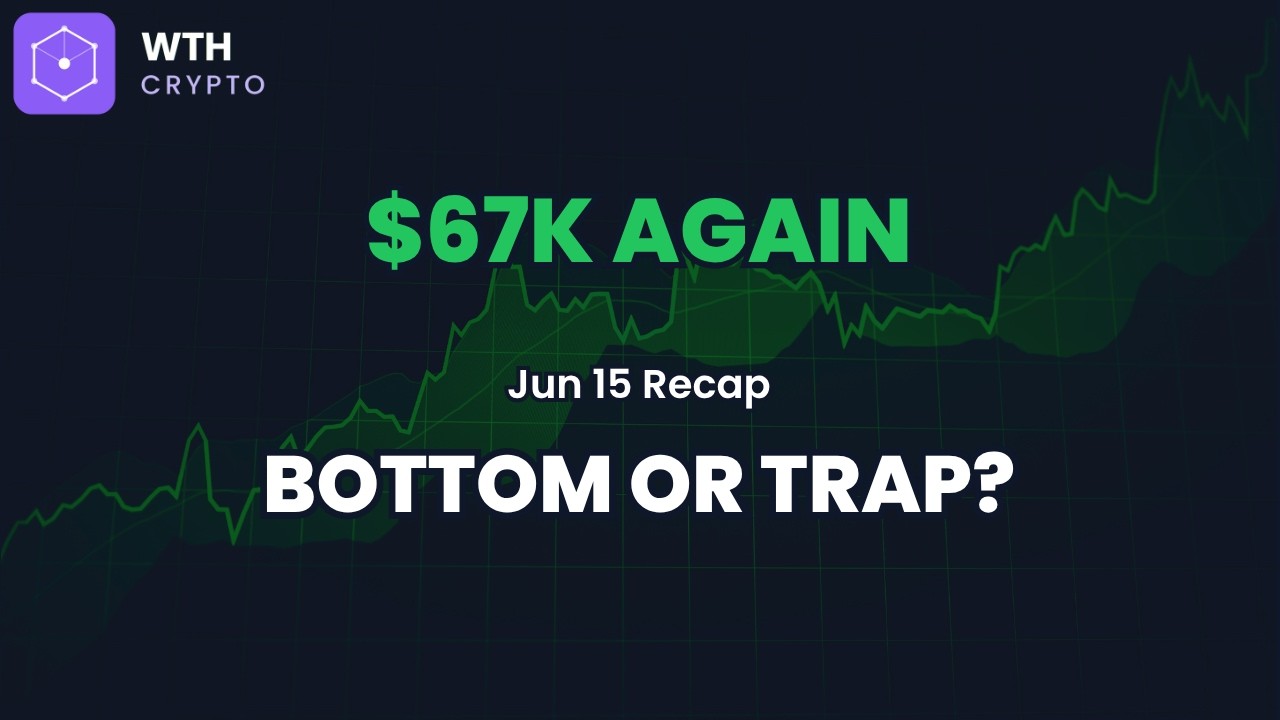
Bitcoin's $67K Bounce on the Iran Deal: Why Traders Aren't Buying It
Bitcoin reclaimed $67K on a US-Iran peace deal, but the last two truce bounces — to $78K, then ~$64K — both round-tripped. Why the rally is real but unconfirmed.
 Happened
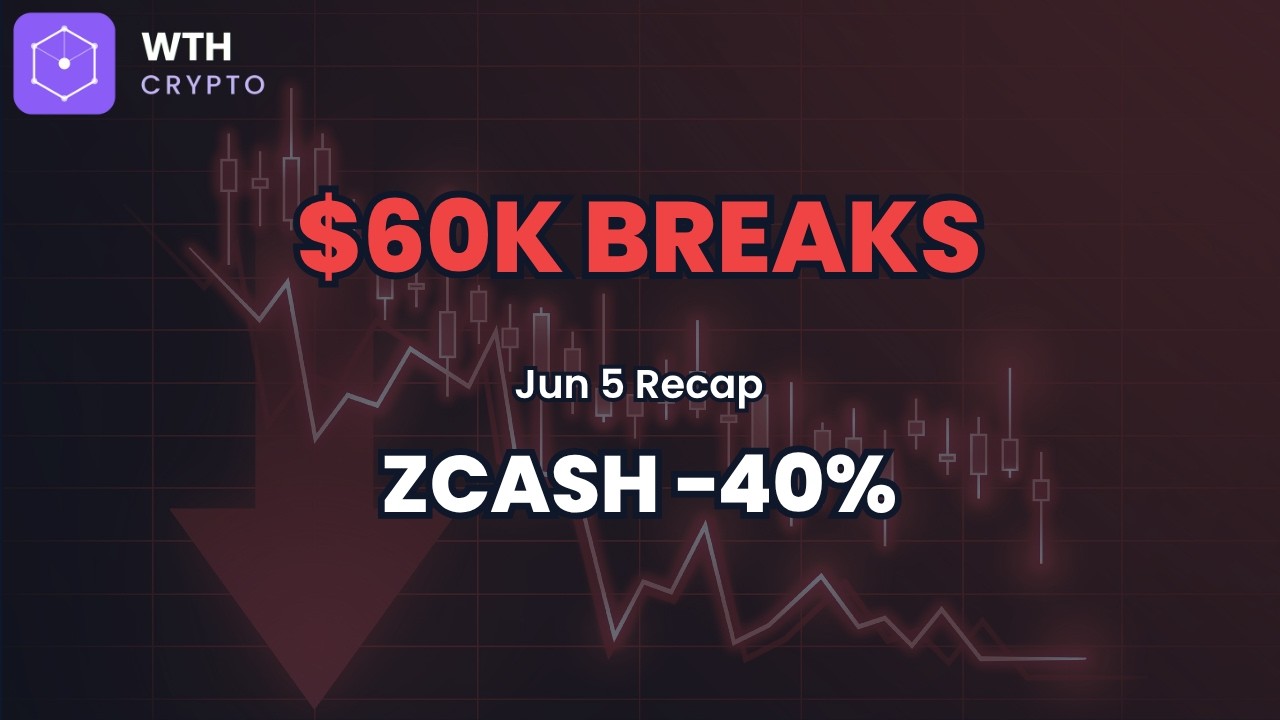
Bitcoin Broke $60,000, and an AI Broke Zcash
Bitcoin broke $60,000 for the first time since October 2024 — but the real story wasn't the Fed. It was the rally's own winners unwinding, and an AI cracking Zcash.
 Happened
Bitcoin Didn't Crash — It Got Outbid by the AI Trade
Bitcoin's drop below $67K looks like a crash, but a 12-day spot ETF outflow streak says it's capital rotating into the AI trade — not crypto breaking.